
Lee County Criminal Case Files
A criminal court record is the court file created after a charge enters the judicial system. It is broader than an arrest entry. Lee County Circuit criminal files can include an indictment, warrant, plea, motions, rulings, sentence, restitution, fines, costs, and the case action summary. District criminal files cover misdemeanors, preliminary felony matters, and some traffic-related criminal cases. Circuit Clerk Mary B. Roberson keeps both Circuit and District Court files through criminal divisions at the T.K. Davis Justice Center.
Venue matters. Lee County is Alabama's Thirty-Seventh Judicial Circuit. Circuit Court handles felony prosecutions and related trial work. District Court handles misdemeanors and preliminary criminal proceedings. Auburn and Opelika Municipal Courts keep their own city misdemeanor and ordinance cases. A person who wants only the initial accusation can compare the narrower Lee County arrest and court charge record, while the full court file supplies later pleas, rulings, and outcomes.
The Lee County District Attorney's official site identifies Jessica Ventiere as the prosecutor for felony cases and certain county misdemeanors. The office works with Sheriff Jay Jones, Auburn Police, Opelika Police, and state agencies. That role differs from the clerk's. Prosecutors decide and pursue charges, while the clerk maintains filed court records.
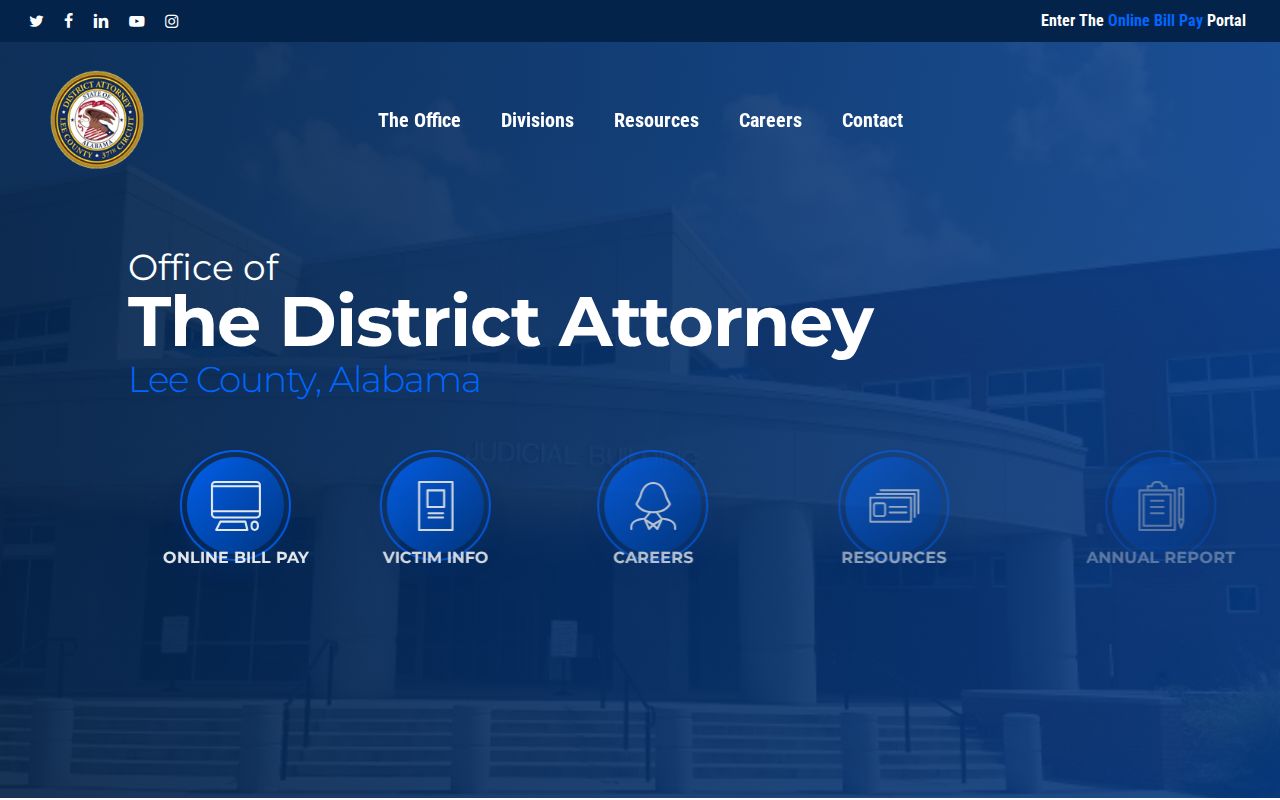
The local prosecutor source helps explain who brings the case, but court filings, orders, and dispositions remain clerk records.
Search Lee County Criminal Records
AlaCourt Access, also called Just One Look, is the main public online route for Alabama trial-court cases. It supports name and case-number searches. A listed search costs $9.99, and a result stating that no matching record exists still counts as a search. AlaCourt reports may contain basic case data, case status, court actions, setting dates, parties, financial history, and a detailed case action summary.
- Choose a name search if the case number is unknown. Use the number printed on an indictment, complaint, citation, or clerk notice when available.
- Confirm that the result belongs to Lee County and the correct Circuit, District, or municipal venue.
- Read the case action summary in date order. Check the current status, court settings, rulings, and financial history.
- Purchase document images only when the docket entry alone is not enough. AlaCourt lists $5 for the first 20 image pages and $0.50 for each added page.
- Request a certified copy from the Circuit Clerk when an official copy is needed for filing, employment licensing, or another formal use.
For a paper, archived, missing, or certified Lee County file, deliver or mail the clerk's Request for Copies and/or Searches to Suite 104, 2311 Gateway Drive, Opelika, AL 36801. The form accepts requests for a complete file, indictment, warrant, judgment, case action summary, history check, and pay history. It says to allow at least seven working days. The base charge is $25 for one to 20 pages, certification is $5 each, and covered paper or archived searches cost $25 even if no information is found. No personal checks or credit cards are accepted.
The District Attorney open-records process is for releasable DA records. The office reviews the request, identifies lawful disclosure, sends any cost letter, then copies, redacts, and mails material after payment. Its own instructions direct requests for court filings, orders, and dispositions back to the Circuit Clerk.
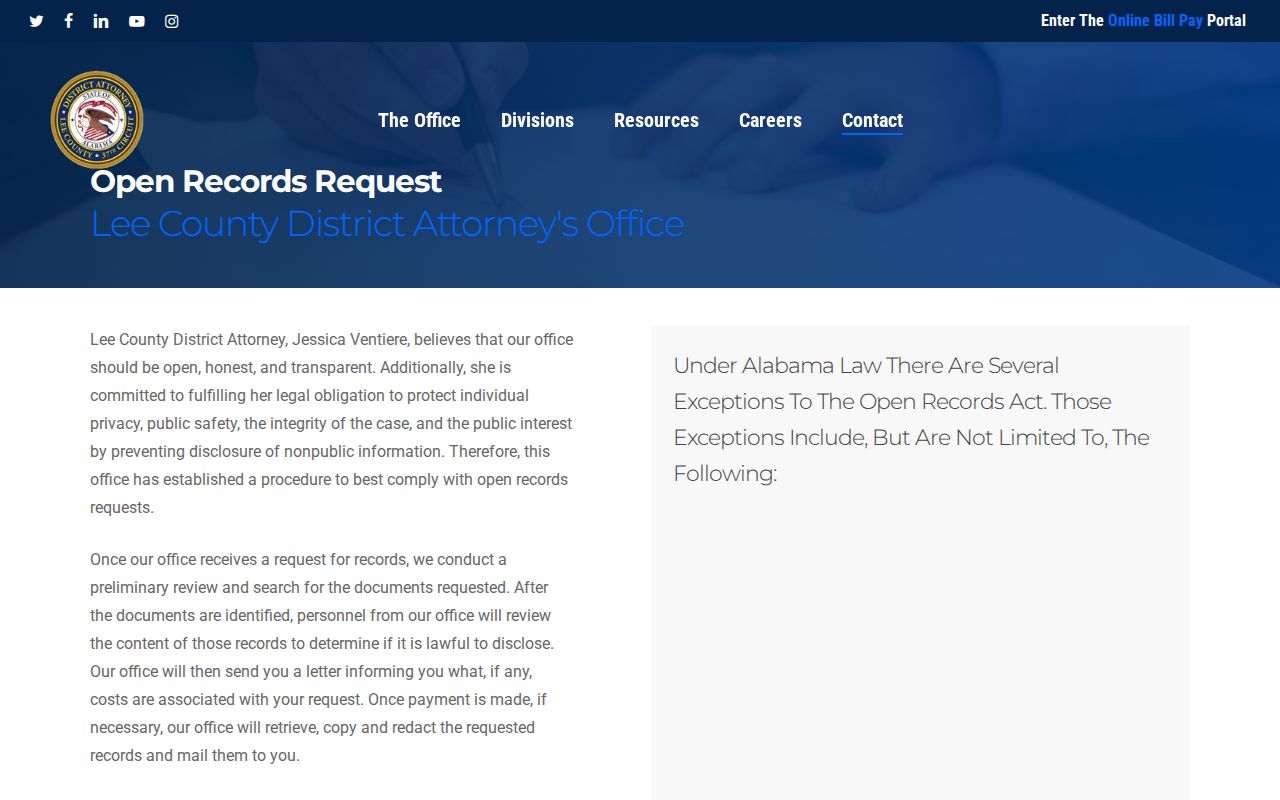
This route can reach prosecution-office material, but it does not replace AlaCourt or the clerk for the official case file.
Lee County Criminal Case Stages
Each phase can create a new entry or document. The charge starts the case, arraignment records the plea, motions ask the judge to act, settings show scheduled proceedings, and a trial or plea leads toward disposition. Sentencing follows a conviction or accepted guilty plea. Not every case uses every stage, and a dismissal may end the matter sooner.
Case flow: Charges Filed › Arraignment › Pretrial / Motions › Plea or Trial › Disposition › Sentencing
- Arraignment
- The court identifies the filed accusation and records the defendant's plea.
- Pretrial and motions
- Hearings, continuances, discovery disputes, and written requests appear in the action history.
- Plea or trial
- An accepted plea or fact-finder's verdict determines whether the charge results in conviction.
- Disposition and sentence
- The record gives each count an outcome and may state custody, probation, fines, costs, and restitution.
What Lee County Records Show
The case number anchors the file. The court and division establish venue, while names identify the defendant and other parties. The case action summary is the chronological index. It should be read with the actual orders because a short docket label may not state every term of a ruling.
| Field | What It Shows |
|---|---|
| Case number and court | The unique file reference, venue, division, and case category. |
| Defendant and parties | Names tied to the prosecution and available attorney information. |
| Filed charge | The accusation, count, offense description, or indictment placed before the court. |
| Case actions and settings | Chronological entries, hearings, continuances, motions, and rulings. |
| Plea and disposition | The formal response to the charge and the result of each count. |
| Sentence and finance | Custody, probation, restitution, fines, costs, balances, and pay history where recorded. |
| Document images | Paid images of filed documents or attachments when AlaCourt makes them available. |
Lee County Charges and Convictions
A charge is an accusation. It is not proof of guilt. A conviction exists only after a guilty verdict or an accepted guilty plea. Lee County court records may retain filed counts that were amended or dismissed, so every charge must be paired with its disposition before drawing a conclusion.
| Charge | Conviction | |
|---|---|---|
| Stage | Accusation | Verdict or plea |
| Meaning | A filed accusation that remains subject to proof and court action | A guilty result recorded after plea or adjudication |
| Possible record path | Amended, reduced, dismissed, or tried | Followed by sentence and financial terms |
Read Lee County Case Outcomes
Disposition means the outcome of a case or count. “Guilty” reflects a conviction. “Not guilty” reflects an acquittal. “Dismissed” means that count ended without conviction, though the precise order may say whether another filing remains possible. A plea field records the defendant's response and should not be confused with the final disposition.
Read sentence information as a set of terms. A record may show confinement, probation, restitution to a victim, fines, court costs, and later payment history. One entry rarely tells the whole story. Check the signed sentencing order and later case-action entries for amendments, payment events, or probation action. The Circuit Clerk copy form expressly offers judgments, last signed orders, restitution and fine pay histories, and complete files.
Lee County Sealing and Expungement
Sealing limits public access under a court rule or order. Expungement is a statutory court process for qualifying criminal records. Alabama courts, not ALEA, grant expungements. Lee County's CR-65 expungement petition requires a certified arrest record or a certified disposition or case action summary, plus a certified ALEA criminal record. The local filing notice lists a $500 fee.
| Sealed | Expunged | |
|---|---|---|
| Source | Court rule or order limits public viewing | Alabama Code Chapter 15-27 and a court order govern qualifying records |
| Public result | Record is not open through ordinary public access | Qualifying record is restricted as directed by the expungement order |
| Access limits | Authorized persons may retain access | The petition warns some court actors may access material in related civil matters |
Lee County Criminal Record Access
Public access starts with Alabama's public-writings law, but it remains subject to confidentiality rules and redaction. The clerk can provide Lee County Circuit and District Court material. It cannot provide federal, municipal, other-county, juvenile, sealed, or expunged files through an ordinary local copy request. Personal and other nonpublic information may be removed before release.
Key Statutes:
Alabama Code Section 36-12-40 gives Alabama citizens a right to inspect and copy public writings unless an exception applies.
Alabama Code Section 12-15-133 makes juvenile court records confidential outside authorized access.
The ALEA criminal-record expungement page explains that courts grant relief under Alabama law.
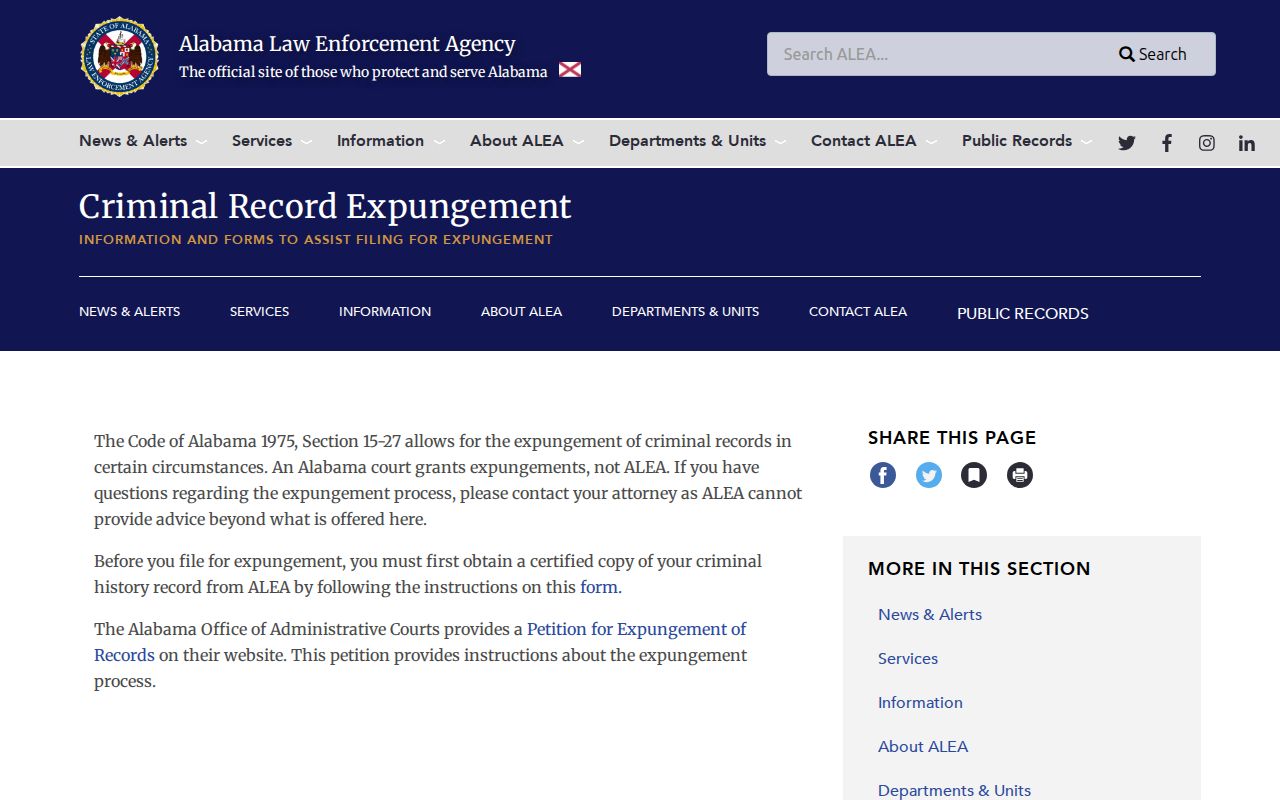
ALEA supplies the certified criminal record required with the petition, while the Lee County court decides whether to grant it.
Restricted Lee County Criminal Files
Juvenile records are confidential under Alabama law. Sealed and expunged files do not appear through ordinary public search. Records may also contain redacted personal identifiers, privileged matter, or other nonpublic facts. A missing online result therefore does not prove that no event occurred. It may reflect venue, timing, data entry, restricted access, or a paper file.
Alabama Code Section 15-27-1 addresses qualifying misdemeanor, violation, traffic, and municipal ordinance expungements.
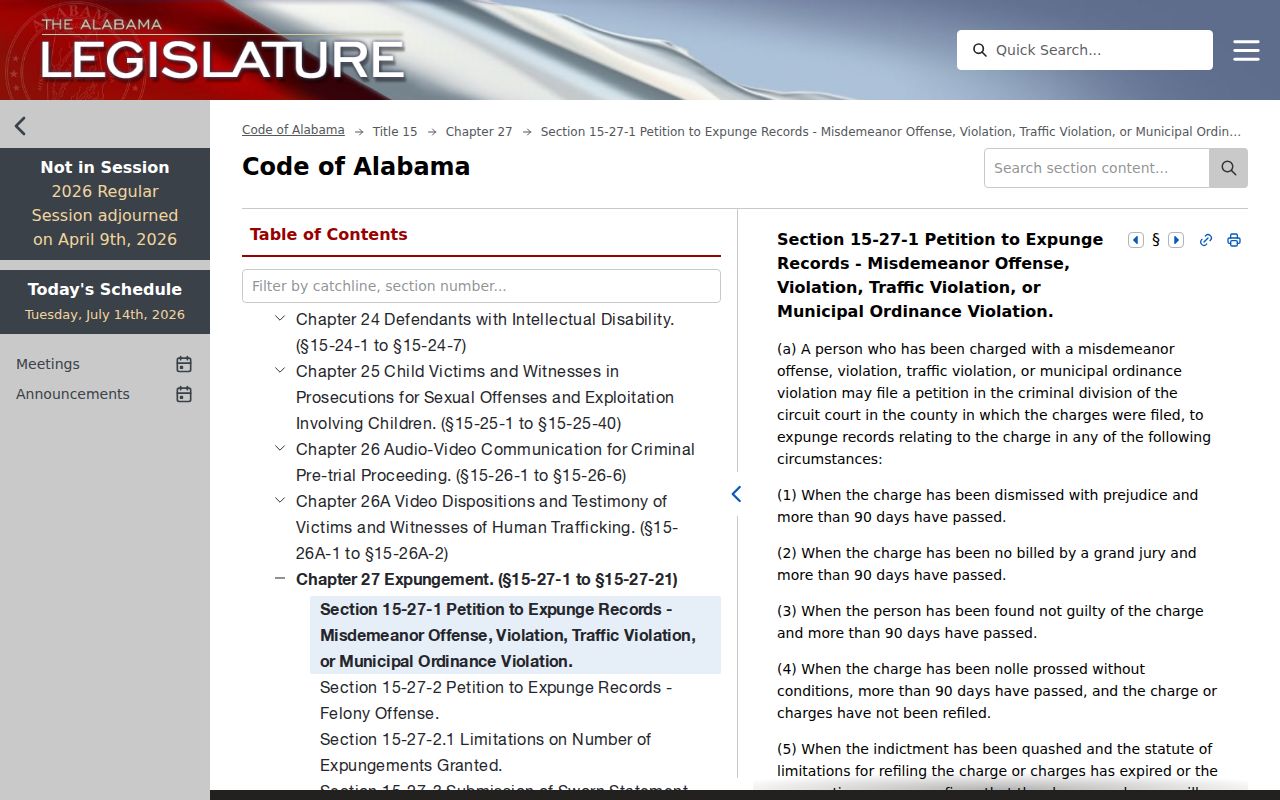
The statute supplies eligibility rules, while a Lee County judge must act on the filed petition.
Alabama Code Section 15-27-2 covers qualifying felony records.
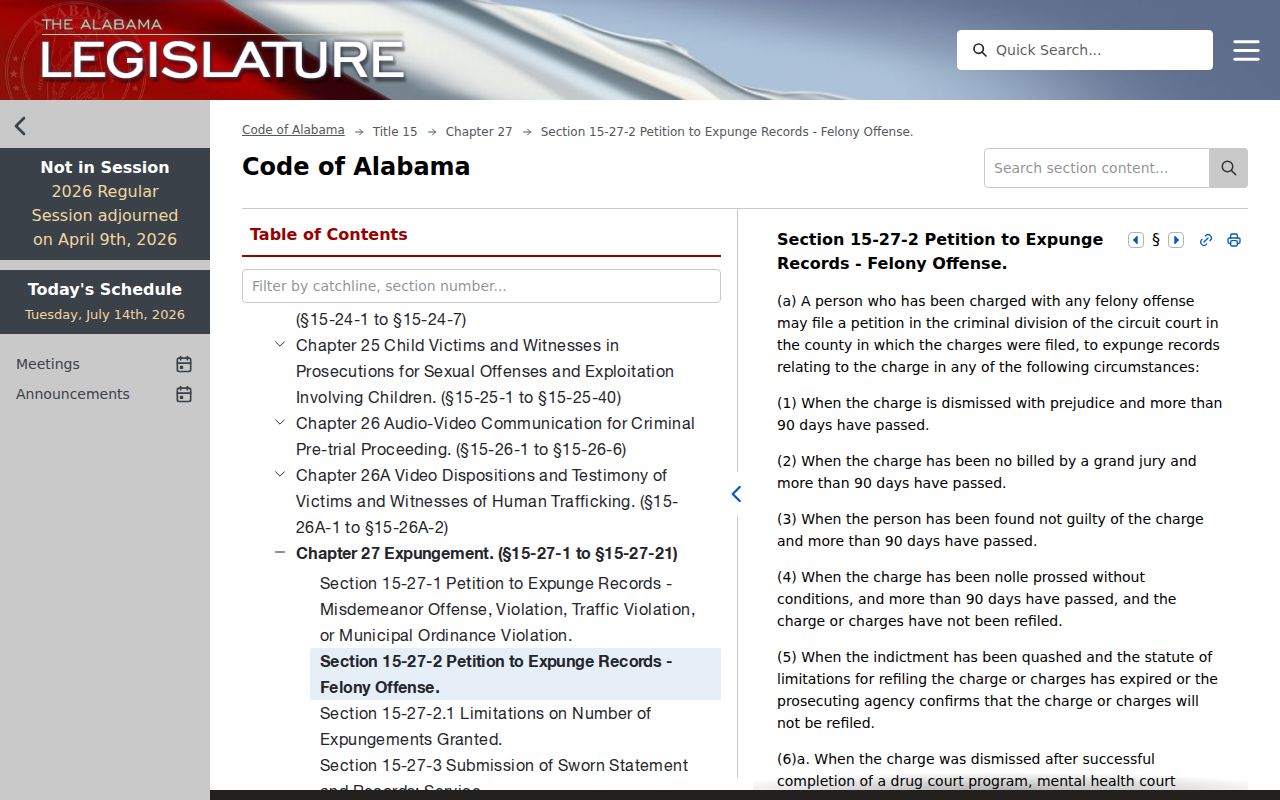
Felony eligibility is distinct from misdemeanor eligibility, so the exact count and disposition must be checked before filing.
For expungement questions, the clerk directory lists Samantha Spears at (334) 737-3501. Circuit criminal contacts include Kamala Hardnett at (334) 737-3510 and Chelsea Moffett at (334) 737-3547. Those staff channels help route record questions, but court personnel cannot turn an ordinary public request into access to a confidential file.
Note: Verify a criminal result against the signed order because a search summary can omit terms or lag behind the newest filing.