
Lee County Arrest Records and Charges
Lee County arrest records begin on the law-enforcement side. They identify the person arrested and may connect to booking, an arresting agency, and an initial alleged offense. The public recent-arrests results maintained under Sheriff Jay Jones visibly show name and photo cards. They should not be treated as final court outcomes. After review, the District Attorney or a municipal prosecutor may file, revise, or decline charges. Filed counts then become part of the court record maintained by Circuit Clerk Mary B. Roberson at the T.K. Davis Justice Center.
The Lee County Sheriff's recent-arrests search is the official county arrest channel.
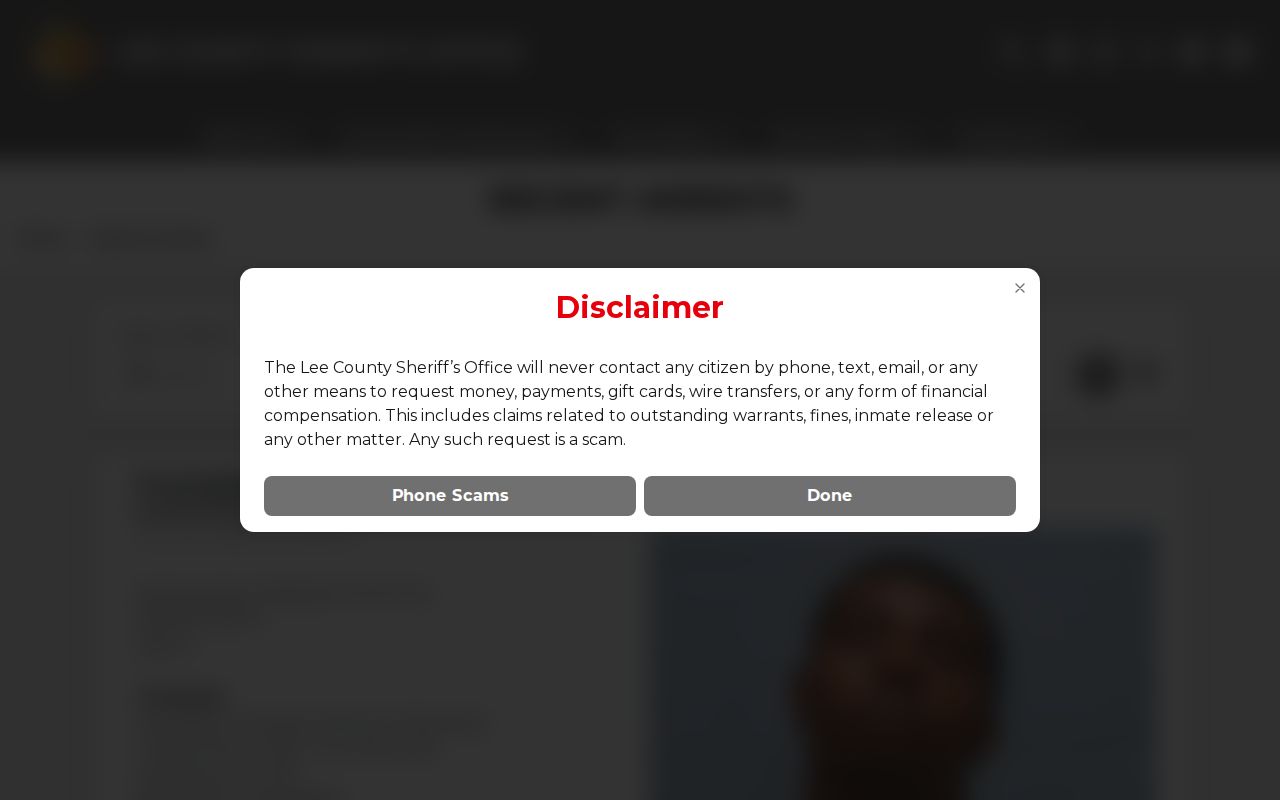
The live list supports name filtering and arrest cards, while court charge status must be checked in the later court file.
A booking profile and a charge record answer different questions. The first shows custody-side facts available from the Sheriff. The second shows the accusation filed in Circuit, District, or Municipal Court. For current custody, use the Lee County inmate roster. For pleas, motions, disposition, and sentence, read the full criminal case file rather than stopping at the initial charge.
Find Lee County Arrest Records
Use separate channels in sequence. Begin with the Sheriff's recent-arrests list for county arrest cards or the current inmate list for jail custody. Then search AlaCourt Access by name or case number for Circuit and District Court charges. Auburn and Opelika city misdemeanors, ordinances, and related warrants may stay with their municipal courts.
- Search the recent-arrests page using the “Type to Search” box and match the full name carefully.
- Open the visible profile, but do not infer a conviction from a photo or arrest listing.
- Search AlaCourt for the filed Lee County case. Verify the court, case number, and charge or count.
- Read each charge with its current case status and disposition. Check later entries for amendments or dismissal.
- Request a copy from the Circuit Clerk if an indictment, warrant, order, or certified case action summary is needed.
The Sheriff's public profile inspected in the research visibly displayed a name and image, but detailed booking number, time, charges, bond, court date, arresting agency, housing, and release fields did not appear in the text capture. The page therefore does not promise those fields. The inspected official inmate profile shows how a public card opens into an individual result.
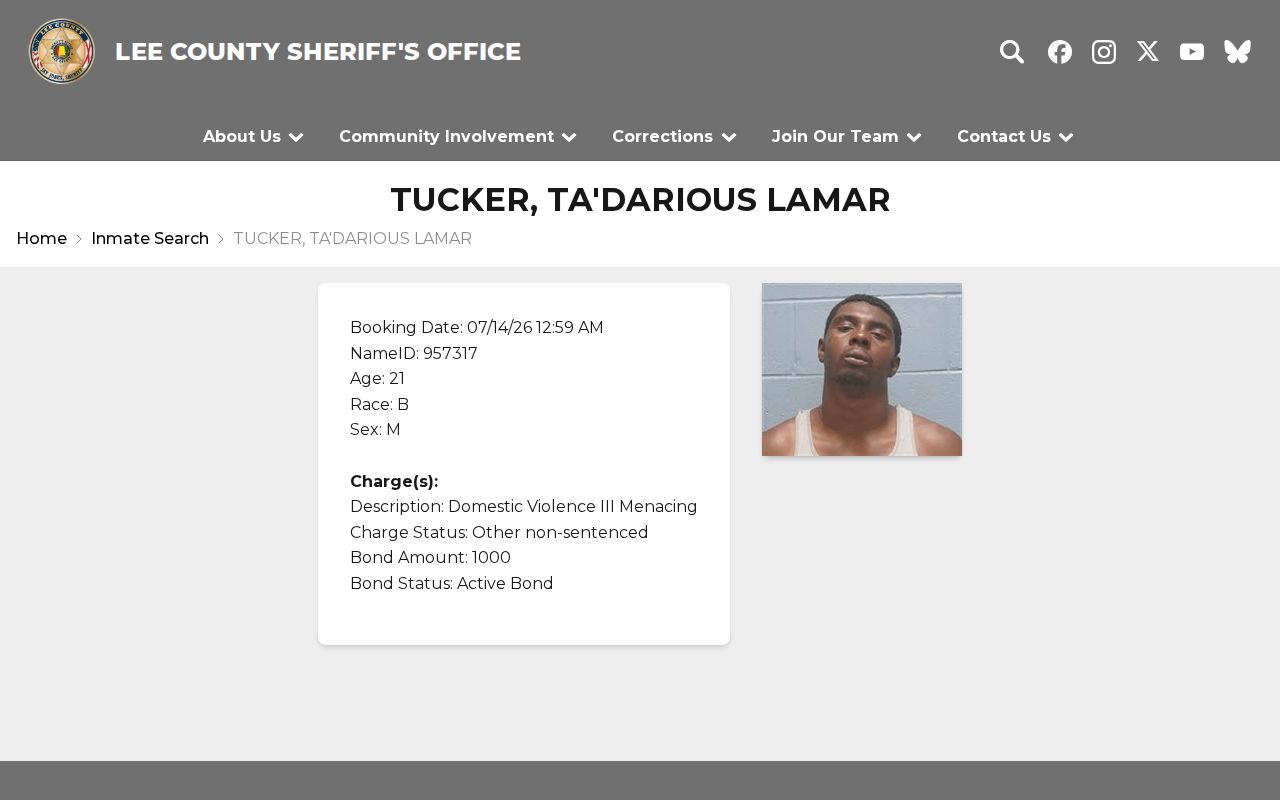
Live browser content may change, so verify what the official profile actually displays at the time of the search.
Lee County Charges After Arrest
An arrest does not freeze the initial allegation into a final charge. A prosecutor evaluates the facts and selects the charging path. In Lee County, District Attorney Jessica Ventiere's office prosecutes felonies and certain misdemeanors. City prosecutors handle municipal matters. The charging document identifies the formal accusation placed before the court.
| Document | Source | Record role |
|---|---|---|
| Complaint | Officer or prosecutor, depending on the case | States the alleged offense used to begin a court matter. |
| Information | Prosecutor | Formal prosecutor-filed accusation used where Alabama procedure permits. |
| Indictment | Grand jury | Formal felony charging document returned by the grand jury. |
The Circuit Clerk copy form specifically lists an indictment, warrant copy, complete file, case action summary, and judgment as request choices. A copy request may be mailed or delivered to Suite 104, 2311 Gateway Drive, Opelika. The form lists $25 for one to 20 pages, $0.50 for added pages, and $5 for each certification, with at least seven working days allowed.
The clerk form also asks for the defendant's name, charge, case number, and date of birth when known. Those details reduce the risk of matching the wrong Lee County case. A requester can choose criminal rather than civil material and state whether certification is needed. The clerk holds Lee County Circuit and District Court files only. Federal cases, city court files, and cases from other counties must go to the office that created them.
When no case number is known, a name search through AlaCourt may identify the filing. AlaCourt lists $9.99 for a name or case-number search, and a no-match response still counts as a paid search. Its report can include court actions, current status, settings, party data, financial history, and a detailed case action summary. Those fields help connect the initial charge to later court action, but the signed order controls the exact result.
Lee County Charge Jurisdiction
Felony files belong in Circuit Court. District Court handles misdemeanors, preliminary felony matters, and county or state traffic-related criminal cases. Misdemeanors within Auburn or Opelika city limits usually route through that city's municipal court. The county warrant magistrate handles countywide felonies and misdemeanor offenses outside those two city limits, subject to the local rules for incident reports and probable cause.
The Sheriff patrol source identifies arrest, report-taking, and warrant-service duties.
That agency record may document enforcement activity, while the court record documents what was formally filed and how it was resolved.
Read Lee County Charge Status
Charges can change as facts are reviewed and the case moves. Read each count separately. A pending label means no final outcome is shown for that count. An amended or reduced count replaces or changes an earlier accusation. Dismissal ends that count without conviction. “Nolle prosequi” means the prosecution has chosen not to proceed with the charge at that time.
| Status | What it means |
|---|---|
| Pending | The filed accusation awaits later court action or disposition. |
| Amended or reduced | The charge description, level, or count changed during the case. |
| Dismissed | The count ended without a guilty result. |
| Nolle prosequi | The prosecutor declined to continue that charge at the recorded stage. |
| Guilty or not guilty | The court record shows a conviction or acquittal after plea or adjudication. |
One arrest can yield several counts with different results. Never apply one disposition to the full arrest without matching it to each count.
Lee County Charges Versus Convictions
A charge is an allegation. A conviction is a guilty result. Arrest records and charging documents can remain relevant even when the accused person was acquitted or the charge was dismissed, but those records must not be described as proof of guilt.
| Point | Charge | Conviction |
|---|---|---|
| Meaning | Formal accusation | Guilty result after plea or decision |
| Where to read | Charging document and count list | Disposition and judgment |
| Possible next step | Amended, dismissed, reduced, or tried | Sentence, probation, fines, or restitution |
Lee County's case action summary can connect the stages, but the signed order is the best source for exact terms. Court charge records should always be read with their date and current case status.
Lee County Prosecutor Records
The District Attorney open-records channel reviews requests, searches for documents, determines what may lawfully be disclosed, and sends a cost letter when needed. The office uses the official district-attorney records request form. After payment, it retrieves, redacts, copies, and mails records. If the request concerns filings, orders, or dispositions available through AlaCourt, the DA directs the requester to the Circuit Clerk instead.
The DA's office is at 2311 Gateway Drive in Opelika. Its phone is (334) 737-3446, fax is (334) 737-3436, and email is info@leecountyda.org. The office works with the Lee County Sheriff's Office, Auburn Police Department, Opelika Police Department, and state law-enforcement agencies. That coordination can produce agency reports and prosecution records that overlap in subject but remain distinct in custody. Ask each office for the record it actually maintains.
A Sheriff's record request is the better route for a releasable arrest or booking-side agency record. The DA route addresses prosecution-office material, and the Circuit Clerk supplies the filed charge, court action, and disposition. Using the correct custodian avoids treating a law-enforcement narrative as if it were the final court record.
A Sheriff's operation may generate arrest, incident, or investigative material before a court case is filed. The Operation Gang Shield item documents executed search warrants and resulting charges.
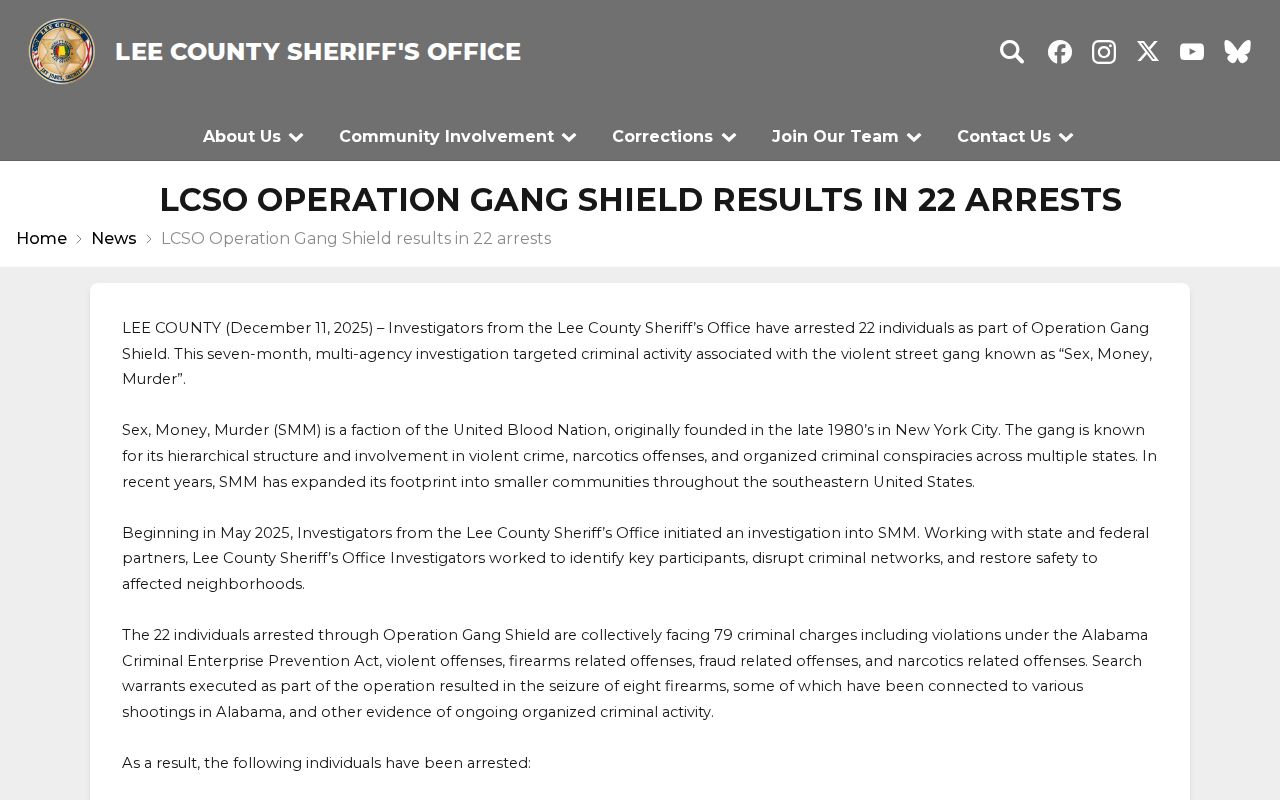
The item illustrates the sequence from law-enforcement action to additional charges, but it is not a countywide arrest database.
Restricted Lee County Charge Records
Juvenile charges are confidential under Alabama Code Section 12-15-133. Sealed and expunged records are also outside ordinary public access. Private identifiers, privileged facts, and nonpublic investigative details may be redacted. The law does not turn every arrest or charge into an unrestricted public file.
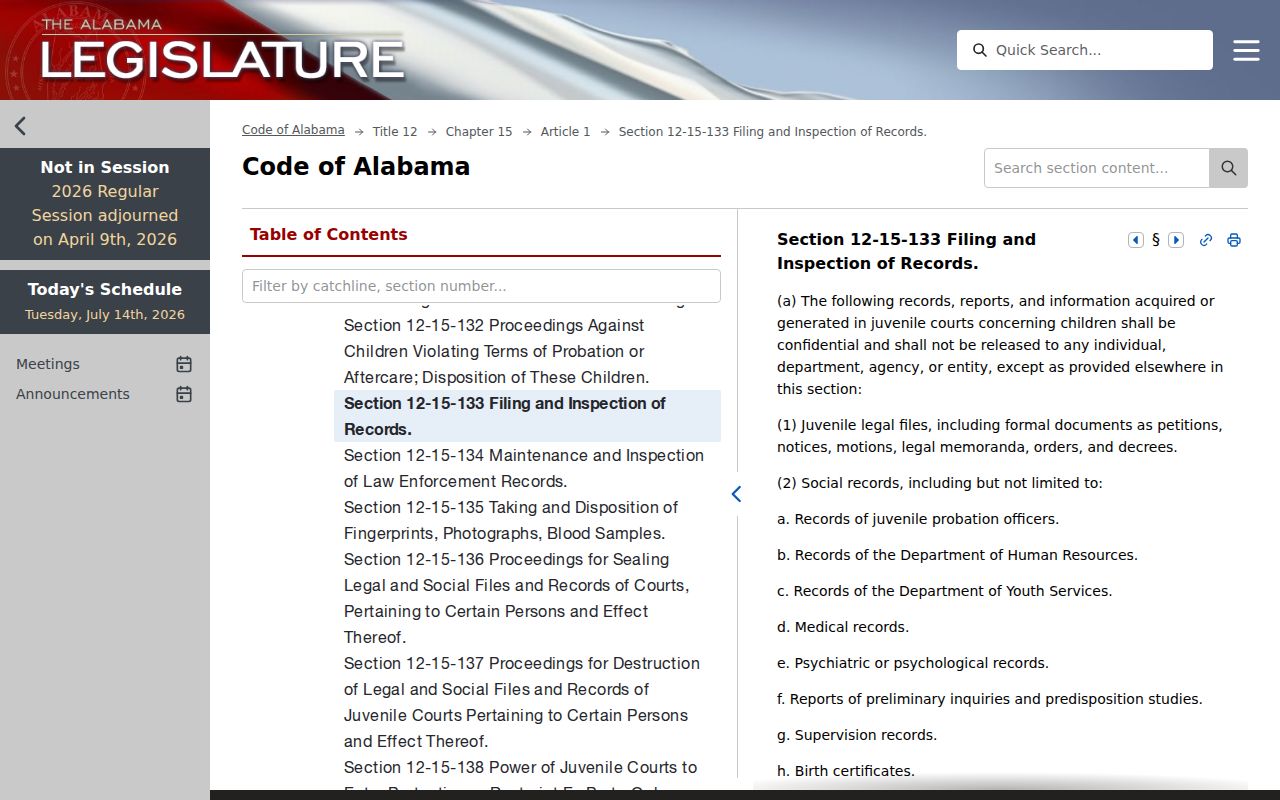
The statute is a direct warning that juvenile court material must not be treated like an adult public charge record.
Alabama courts may expunge qualifying records under Chapter 15-27. Lee County's petition process requires certified arrest or disposition material and a certified ALEA criminal record. Sealing limits public visibility; expungement follows the specific relief in the court order. Neither process should be inferred from an empty online result.
- Sealed record
- A court restriction or confidentiality rule limits public viewing. Verify the authority and scope of the seal.
- Expunged record
- A qualifying Alabama petition and court order restrict the charge as directed. Verify the exact charge, disposition, eligibility, and order.
Note: An arrest date and a court filing date may differ, so use both the name and case number when matching records.